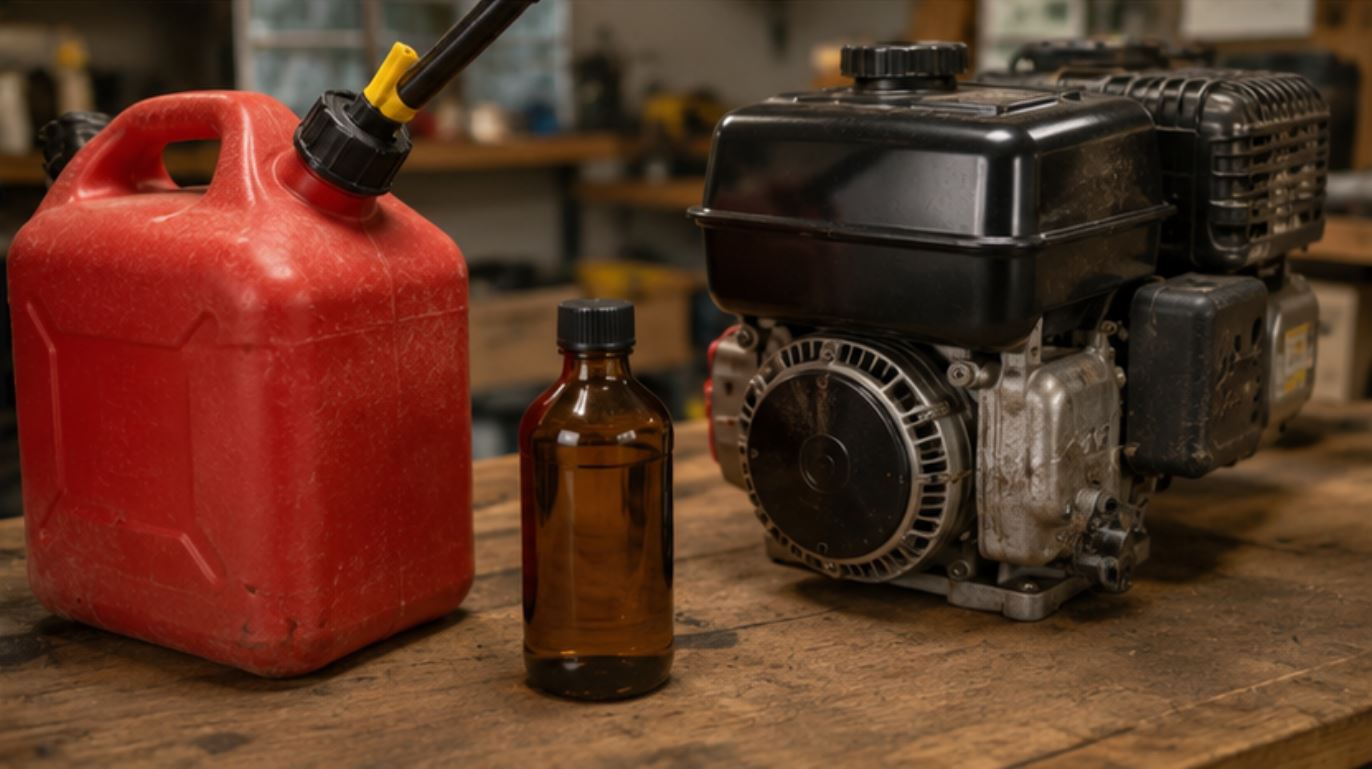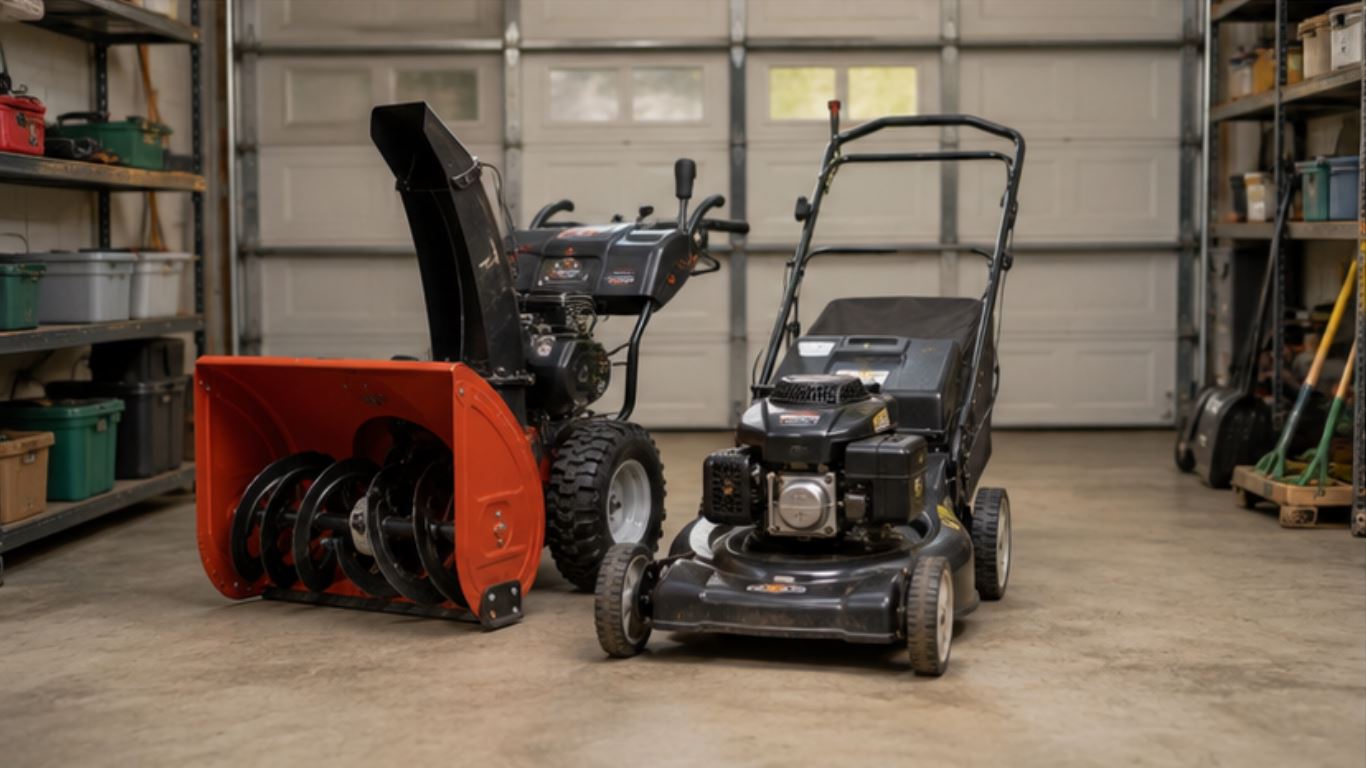
Fall is the great changeover for outdoor power equipment. Your mower is winding down for a long rest, while your snow blower is about to be called into duty. Getting both right now means neither one leaves you stranded later.
Part 1: Waking Up Your Snow Blower
The worst time to discover your snow blower won't start is during the first storm of the year. Do this before the snow flies.
Fresh Fuel Is Everything
If you left gas in it last spring, that fuel is now stale and probably gumming up the carburetor. Drain the old fuel and refill with fresh gasoline treated with stabilizer. If it won't start on fresh fuel, the carburetor likely needs cleaning.
Pre-Season Checklist
- Check the oil and change it if it's dark or overdue.
- Inspect the spark plug and replace it if worn.
- Examine the auger and paddles for wear or damage.
- Check the shear pins — replace any that are bent or broken, and keep spares on hand.
- Inspect the drive belt and friction disc for wear.
- Adjust the skid shoes and scraper bar for your surface.
- Test it by running it for a few minutes so you're not troubleshooting in a blizzard.
Part 2: Putting Your Mower to Bed
A mower stored correctly in fall starts easily in spring. Stored carelessly, it becomes next April's repair bill.
The Fuel Decision
You have two good options:
- Stabilize it — Add fuel stabilizer, then run the engine a few minutes so treated fuel reaches the carburetor. Store with a full tank to reduce condensation.
- Run it dry — Run the engine until it stalls from lack of fuel, clearing the carburetor of gas that could varnish over winter.
Either works. What you should not do is leave untreated gas sitting all winter — that's the single most common cause of spring no-starts.
End-of-Season Service
- Change the oil so the engine doesn't sit in dirty, acidic oil for months.
- Clean the deck thoroughly; caked grass holds moisture and causes rust.
- Remove and sharpen the blade, or note it for spring.
- Clean or replace the air filter.
- Remove the spark plug, add a small amount of oil to the cylinder if recommended, and reinstall — this protects against internal rust.
Storage Tips for Both Machines
| Do | Don't | |----|-------| | Store in a dry, covered space | Leave untreated fuel in the tank | | Disconnect the spark plug wire | Store near a furnace or water heater | | Keep batteries on a trickle charger | Stack heavy items on the machine | | Cover to keep dust and moisture off | Forget where you stored the shear pins |
Beat the Rush
Repair shops get slammed with no-start machines at the first snowfall and the first warm spring weekend. The customers who bring equipment in during the off-season get faster turnaround and are ready before everyone else.
If you'd like your snow blower checked before winter — or your mower serviced before storage — Precision Small Engine can handle the full changeover so both machines are ready when their season arrives.