You pull the cord, and nothing happens. Before you assume the worst, know this: a lawn mower that won't start is almost always suffering from one of a handful of simple, fixable problems. Most have nothing to do with a "blown engine."
Here are the seven most common causes we see at the shop, roughly in order of how often they're the culprit.
1. Stale or Bad Fuel
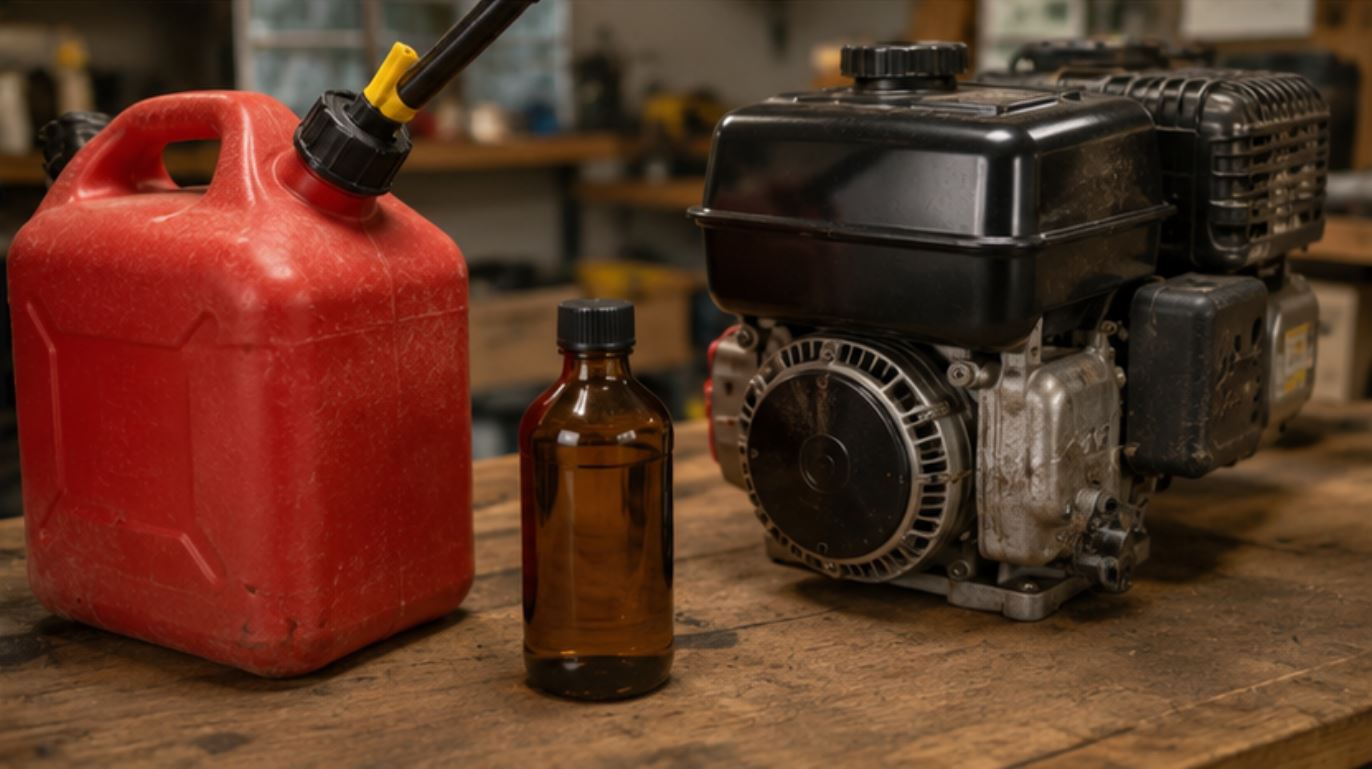
This is the number one reason mowers won't start in spring. Gasoline begins to break down in as little as 30 days. As it degrades, it leaves behind gummy varnish that clogs the tiny passages in your carburetor.
If your mower sat all winter with gas in the tank, drain the old fuel and refill with fresh gasoline. Adding a fuel stabilizer at the end of each season prevents this entirely.
2. A Clogged Carburetor
When stale fuel gums up the carburetor, no amount of pulling will help. Symptoms include starting briefly then dying, or not starting at all. A carburetor cleaning or rebuild is one of the most common repairs we perform — and it's what brings most "dead" mowers back to life.
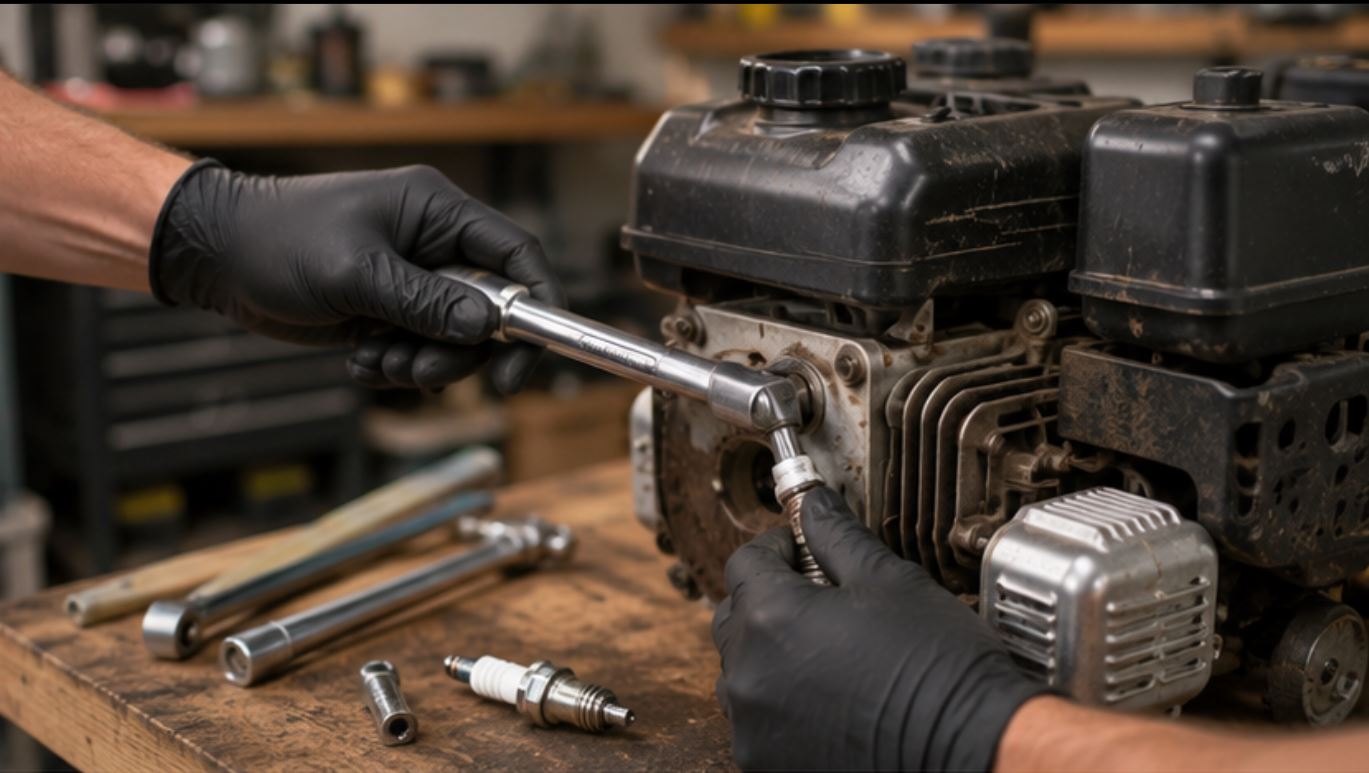
3. A Fouled or Bad Spark Plug
A spark plug that's black, oily, or corroded can't fire reliably. Spark plugs are cheap and easy to replace.
| Spark plug condition | What it means | |----------------------|---------------| | Light tan/gray | Healthy, running well | | Black and sooty | Running rich, dirty air filter | | Wet with fuel | Flooded engine | | White/blistered | Running too hot |
Replace the plug once a season as part of a basic tune-up.
4. A Dirty Air Filter
Engines need air as much as fuel. A filter caked with grass and dust chokes the engine so it won't start or runs rough. Paper filters should be replaced; foam filters can be washed, dried, and lightly re-oiled.
5. No Fuel Getting Through
Check the obvious first: is there gas in the tank? Then look for a clogged fuel line, a stuck fuel shutoff valve, or a bad primer bulb. On mowers with a primer, a cracked bulb won't push fuel into the carburetor.
6. Safety Features Not Engaged
Every modern mower has a safety bail (the handle you squeeze against the grip). If it isn't held down, the engine won't start — by design. Also check that riding mowers are in neutral or park with the brake engaged.
7. Old or Contaminated Oil (and Low Oil)
Many newer mowers have a low-oil sensor that prevents starting to protect the engine. Check your oil level and condition. Milky or overfilled oil can also cause problems.
When to Call a Professional
If you've checked fresh fuel, a clean air filter, a good spark plug, and the safety controls and it still won't start, the issue is likely inside the carburetor or the ignition system. That's where professional diagnostics save you time and frustration.
At Precision Small Engine, most no-start mowers are running the same day or next day. If yours has you stumped, bring it in — we'll find the real problem and fix it right the first time.